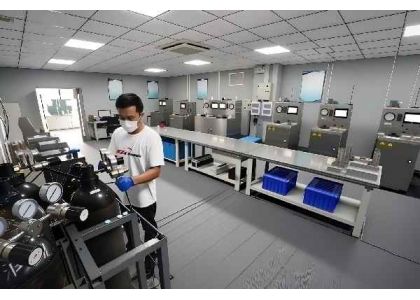
Successful oil well cementing begins long before cement slurry enters the well. In the laboratory, engineers must understand how cement slurry behaves during mixing, pumping, placement, and curing under different temperature and pressure conditions. Reliable laboratory testing helps drilling contractors, oilfield service companies, and cementing specialists evaluate slurry performance and develop formulations suitable for specific well conditions.
Selecting the right oil well cement testing equipment is therefore an important step in building an efficient cementing laboratory. Among the essential instruments are the HPHT Consistometer, HPHT Curing Chamber, and Atmospheric Consistometer. Each instrument serves a different purpose, from evaluating slurry thickening time to studying cement development under simulated downhole conditions.
This guide explains their applications, key selection considerations, and roles in modern oil well cement testing.
Oil well cement slurry must remain pumpable long enough to be mixed, transported, and placed at the intended location. After placement, it must develop the properties required to support casing, isolate formations, and maintain well integrity.
However, cement slurry does not behave identically under all conditions. Temperature, pressure, water-to-cement ratio, additives, mixing procedures, and the properties of the base materials can influence its performance.
For example, deep wells and high-temperature formations may require specialized cement formulations and carefully controlled laboratory evaluations. A slurry that performs well under atmospheric conditions may behave differently when exposed to elevated temperatures and pressures.
A well-equipped cementing laboratory allows engineers to evaluate formulations before field application, compare additive combinations, investigate unexpected results, and improve the consistency of cementing operations.
Three important instruments support these activities: the HPHT Consistometer, HPHT Curing Chamber, and Atmospheric Consistometer.
The HPHT Consistometer is an essential instrument for testing oil well cement slurry under elevated temperature and pressure conditions.
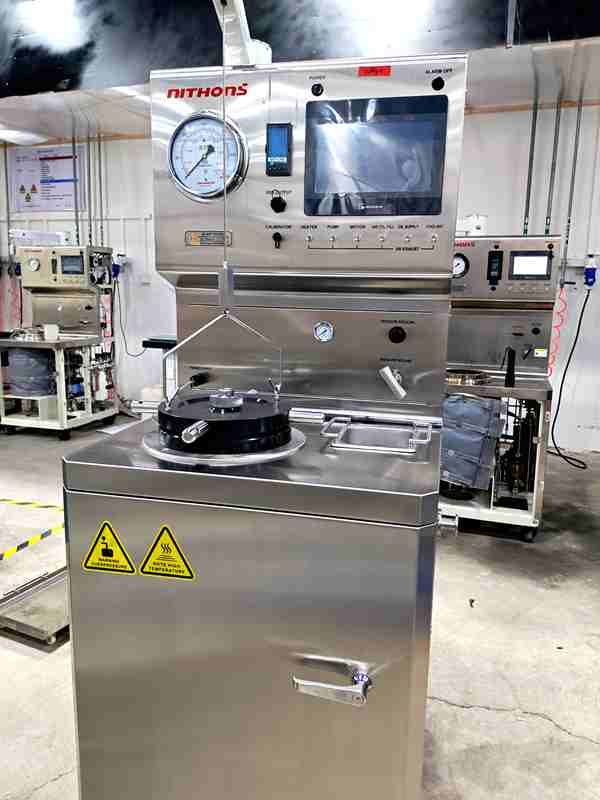
During a cementing operation, slurry must maintain sufficient pumpability throughout the planned placement period. If it thickens too quickly, pumping and placement may become difficult. If its thickening behavior does not meet the job requirements, the cementing program may need to be adjusted.
An HPHT Consistometer simulates programmed temperature and pressure conditions while measuring changes in slurry consistency over time. The resulting data help engineers assess thickening behavior and determine whether a cement formulation is suitable for the intended operating conditions.
Evaluating thickening time under simulated downhole conditions.
Comparing the performance of retarders and other cement additives.
Assessing cement slurry formulations for high-temperature and high-pressure wells.
Supporting cementing schedule development and laboratory quality control.
Investigating changes in slurry consistency caused by formulation adjustments.
When selecting an HPHT Consistometer, buyers should review the maximum operating temperature and pressure, consistency measurement range, rotation speed, temperature and pressure control, data acquisition capabilities, and compatibility with applicable testing procedures.
The instrument should also be practical for routine laboratory use. Touchscreen operation, programmable test schedules, automatic data recording, and convenient maintenance can help improve testing efficiency.
For laboratories working with demanding well conditions, Nithons offers HPHT Consistometer solutions designed for oil well cement testing. Model selection should be based on the laboratory's required operating envelope and testing standards.
While a consistometer focuses on slurry consistency and thickening behavior, an HPHT Curing Chamber is used to expose cement specimens to controlled elevated temperature and pressure conditions during curing.
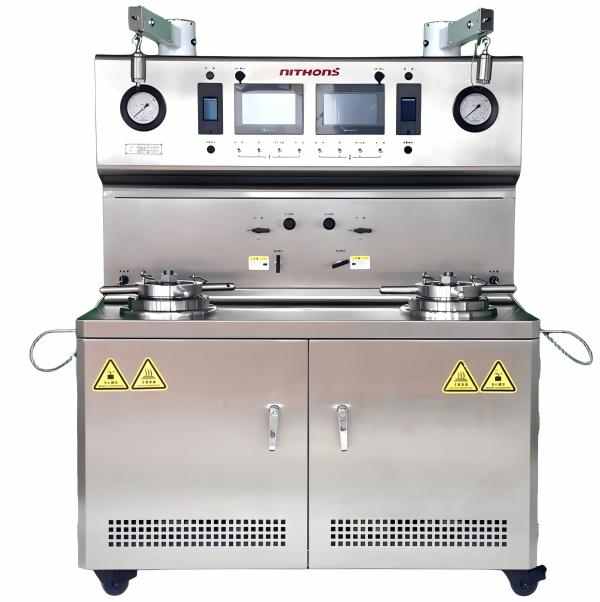
After cement slurry is placed in a well, it undergoes a transition from a pumpable material to a hardened cement structure. Temperature, pressure, curing duration, and slurry composition can influence the development of the hardened cement.
An HPHT Curing Chamber helps laboratories reproduce selected downhole curing conditions in a controlled environment. The conditioned specimens can subsequently be evaluated using appropriate testing methods and compatible laboratory instruments.
Conditioning cement specimens under elevated temperature and pressure.
Supporting research into cement hydration and strength development.
Comparing different cement systems and additive formulations.
Evaluating the effects of curing conditions on cement performance.
Supporting laboratory studies for deep wells and high-temperature applications.
The required temperature and pressure ranges should be established before equipment selection. Buyers should also consider chamber capacity, temperature and pressure regulation, specimen compatibility, safety interlocks, operating procedures, and maintenance requirements.
The curing conditions should reflect the intended test program. It is important to distinguish between the chamber's maximum rated conditions and the actual conditions used in a particular experiment.
Nithons HPHT Curing Chamber solutions are intended for laboratories that need controlled high-temperature, high-pressure conditioning of oil well cement specimens. Choosing an appropriate configuration helps laboratories conduct repeatable experiments and build a more complete understanding of cement performance.
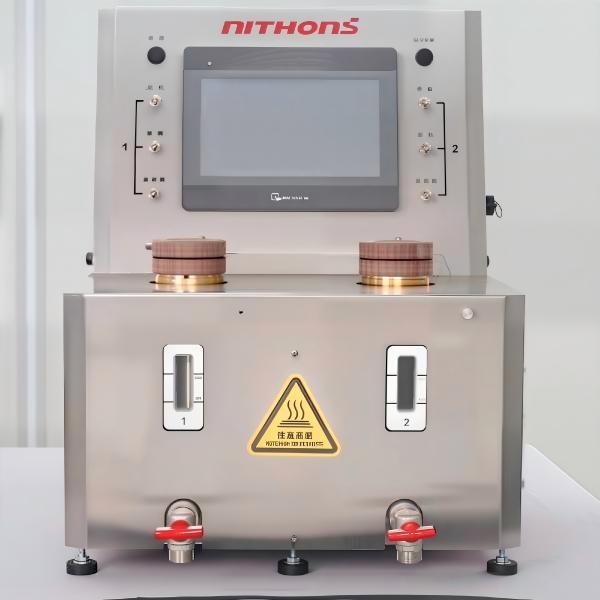
Not every cement slurry test requires elevated pressure. An Atmospheric Consistometer provides a practical way to evaluate cement slurry consistency under controlled atmospheric-pressure conditions and is widely useful in routine laboratory work.
It can help laboratories compare slurry formulations, observe consistency changes, and conduct preliminary evaluations before moving to more demanding testing conditions.
Routine evaluation of cement slurry consistency.
Preliminary comparison of cement formulations.
Laboratory studies of additive effects under atmospheric conditions.
Quality control and training activities.
Supporting research and development before specialized HPHT testing.
An Atmospheric Consistometer can be particularly useful when a laboratory needs to conduct frequent preliminary tests or compare several formulations efficiently.
However, atmospheric testing does not reproduce the full temperature and pressure environment of a deep well. Results should therefore be interpreted according to the test conditions and should not automatically be treated as equivalent to HPHT test results.
When purchasing an Atmospheric Consistometer, consider the operating temperature range, consistency measurement system, rotation control, programmable testing functions, data recording, ease of cleaning, and availability of replacement parts and accessories.
For laboratories performing routine oil well cement testing, Nithons Atmospheric Consistometer provides an option for evaluating slurry behavior under controlled atmospheric conditions.
Although these instruments are all used in cementing laboratories, they are not interchangeable.
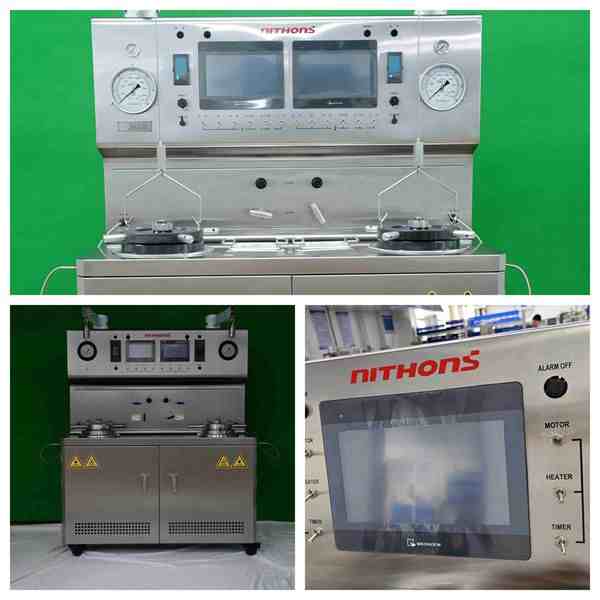
HPHT Consistometer: Primarily evaluates cement slurry consistency and thickening behavior under programmed high-temperature and high-pressure conditions.
HPHT Curing Chamber: Conditions cement specimens under controlled elevated temperature and pressure to support studies of hardened cement development and subsequent testing.
Atmospheric Consistometer: Evaluates slurry consistency under atmospheric-pressure conditions, making it suitable for routine testing and preliminary formulation comparisons.
A laboratory focused on deep-well cementing research may prioritize HPHT equipment, while a laboratory conducting routine quality control may also benefit from an Atmospheric Consistometer.
For a comprehensive testing program, the three instruments can complement one another. Their combined use supports a broader workflow covering preliminary slurry evaluation, thickening behavior under simulated downhole conditions, and curing studies on prepared cement specimens.
The correct configuration depends on the laboratory's testing objectives, applicable standards, expected sample throughput, and budget.
Choosing suitable equipment is only one part of establishing a reliable cementing laboratory. Consistent sample preparation, calibrated instruments, controlled testing procedures, appropriate accessories, and well-maintained equipment are also essential.
Laboratories should establish clear procedures for mixing slurry, preparing specimens, setting test parameters, recording results, and cleaning instruments after use. Test conditions should be selected according to the intended application and the relevant testing standard.
Equipment manufacturers should also provide clear technical documentation, operating instructions, maintenance guidance, and responsive technical support. These factors can be particularly important for laboratories operating in remote oilfield locations or supporting multiple projects.
When planning a new laboratory or upgrading existing facilities, buyers should consider not only individual instruments but also how each instrument fits into the overall testing workflow.
Reliable oil well cement testing helps engineers make informed decisions about slurry formulations, thickening behavior, and cement development under different conditions.
The HPHT Consistometer supports thickening-time evaluation under simulated downhole conditions. The HPHT Curing Chamber provides controlled curing conditions for cement specimens, while the Atmospheric Consistometer supports routine slurry evaluation at atmospheric pressure.
By selecting equipment according to their actual testing requirements, laboratories can improve workflow efficiency, strengthen quality control, and support the development of cementing solutions for a wide range of well conditions.
Looking for oil well cement testing equipment for your laboratory?
Nithons provides cementing laboratory instruments for slurry preparation, thickening-time evaluation, curing, fluid-loss testing, rheology, and compressive-strength testing.
Explore our HPHT Consistometers, HPHT Curing Chambers, and Atmospheric Consistometers at www.cementinglab.com, or contact our team to discuss your testing requirements and equipment configuration.
Sino-Japanese joint venture Tianjin Nithons Technology Co., Ltd. was established in 2013, focusing on the research and development, manufacturing, sales and after-sales service of a new generation of oil cementing testing instruments and related accessories.
...[ read more ]