Contact Person: Natasha
Mobile/WeChat/WhatsApp: +86 138 2094 6121
E-mail: abroadsales4@nithons.com
Add:Universal Enterprise Park, No.1 Sizhi Rd., Xiqing District, Tianjin, China
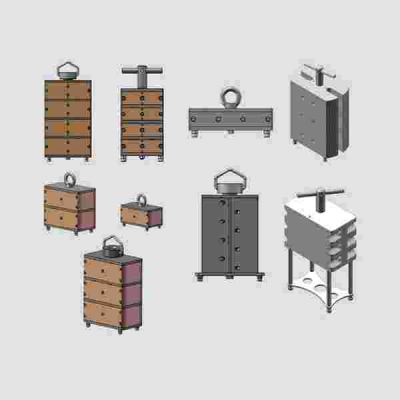
Cement curing molds are essential accessories in oil well cement testing laboratories. They are used to prepare cement specimens with defined shapes and dimensions for subsequent laboratory evaluation, including compressive strength and flexural strength testing where applicable.
For oilfield service companies, drilling contractors, cement additive manufacturers, and research laboratories, the quality of specimen preparation is an important part of a reliable testing process. Appropriate mold dimensions, stable construction, proper assembly, and effective sample removal help laboratories prepare specimens consistently and follow their established testing procedures.
Tianjin Nithons Technology Co., Ltd. supplies cement testing molds and related accessories for oil well cementing laboratories. Our range includes molds for different specimen geometries, with material and dimensional options selected according to the intended test and customer requirements.
Cement testing molds help laboratories prepare specimens for a variety of cement performance evaluations.
Compressive strength testing: Cube-shaped or other specified specimens can be prepared for compressive strength testing using a compatible testing procedure and loading fixture.
Flexural strength testing: Suitable beam molds are used to prepare specimens for flexural strength evaluation when required by the test method.
Cement formulation research: Consistently prepared specimens help researchers compare cement formulations and investigate the effects of additives, water-to-cement ratios, and curing conditions.
Quality control and laboratory testing: Cement specimen molds support repeatable sample preparation for routine laboratory evaluation and research programs.
Curing under controlled conditions: Depending on the mold design and its rated operating conditions, specimens can be prepared for subsequent curing in suitable laboratory equipment, including compatible curing chambers.
The appropriate mold dimensions and test procedure should always be selected according to the applicable standard and the intended evaluation.
Different laboratory tests require different specimen shapes and dimensions. Nithons offers cement testing mold solutions for a range of laboratory applications.
Cube molds are used to prepare cement specimens for compressive strength testing when the selected method specifies cube-shaped samples.
The required cube dimensions depend on the applicable testing procedure. Before ordering, confirm the specimen size, mold configuration, and compatibility with the laboratory's compressive strength testing equipment.
Beam molds are used to prepare elongated cement specimens for flexural strength testing or other specified laboratory evaluations.
The mold dimensions should correspond to the requirements of the intended test method and the available testing fixture.
Some laboratories require non-standard specimen dimensions, specialized configurations, or replacement molds for existing testing equipment.
Nithons can discuss custom mold requirements according to the customer's drawings, dimensions, material preferences, and intended application. Customization feasibility should be confirmed before production.
Material selection is an important consideration when purchasing cement testing molds. The appropriate material depends on the required dimensional stability, expected usage frequency, curing conditions, cleaning procedure, and overall laboratory workflow.
Depending on the mold design and requirements, options may include stainless steel or copper. The availability and suitability of each material should be confirmed for the specific model.
When evaluating a cement mold, laboratories should consider:
Dimensional accuracy: The mold should produce specimens within the dimensional tolerances required by the applicable test method.
Structural stability: The mold should maintain its intended geometry during filling, handling, and specimen preparation.
Assembly and sealing: The mold components should fit correctly and help prevent unwanted leakage during specimen preparation.
Sample removal: The design should allow specimens to be removed without unnecessary damage.
Cleaning and maintenance: Surfaces and components should be practical to clean according to the manufacturer's instructions.
Correct specimen preparation is an important step in obtaining meaningful and comparable laboratory results.
Before selecting a curing mold, buyers should identify the specific testing requirements of their laboratory.
1. Confirm the specimen dimensions. Determine the required length, width, height, or other dimensions from the applicable standard or test procedure.
2. Identify the intended test. Compressive strength, flexural strength, and other evaluations may require different specimen geometries.
3. Select the appropriate material. Consider the intended curing conditions, cleaning method, frequency of use, and material compatibility.
4. Check compatibility with existing equipment. If the mold will be used with a curing chamber, compressive strength tester, or other laboratory equipment, confirm dimensional and operational compatibility.
5. Review maintenance and replacement needs. For laboratories conducting frequent tests, practical assembly, cleaning, and specimen removal can help improve day-to-day efficiency.
6. Confirm applicable standards. Verify that the mold dimensions and configuration match the relevant testing procedure. Do not assume that molds with similar external dimensions are interchangeable.
Cement specimen preparation is one stage in a broader oil well cement testing workflow. After mixing, the cement slurry is placed into the appropriate mold and handled according to the selected test procedure.
Depending on the intended evaluation, the specimens may then undergo controlled curing before being tested using compatible equipment.
For laboratories investigating cement strength development under simulated downhole conditions, a suitable curing chamber and correctly specified molds should be selected as part of the same testing plan. The operating limits of the mold and curing equipment must be verified independently.
Nithons supplies a range of oil well cement laboratory instruments and accessories, helping customers source compatible components for specimen preparation, curing, and strength evaluation.
Tianjin Nithons Technology Co., Ltd. specializes in oil well cementing laboratory instruments and related accessories. Our product range supports cement slurry preparation, thickening-time testing, fluid loss evaluation, rheology, curing, and strength testing.
We understand that laboratories may have different specimen dimensions, material preferences, and equipment configurations. Our team can help review technical requirements, identify suitable mold options, and discuss customization where feasible.
Whether you are replacing an existing mold, expanding laboratory testing capabilities, or equipping a new cementing laboratory, Nithons can help you identify a suitable solution for your application.
A cement curing mold is used to shape cement specimens before curing and subsequent laboratory evaluation. The specimen geometry depends on the intended test method.
Available dimensions depend on the mold type and model. Please provide your required specimen dimensions or the applicable test standard so that the appropriate option can be identified.
Material selection depends on the mold design, testing conditions, cleaning procedure, and usage requirements. Stainless steel and copper may be options for certain models; confirm availability and suitability before ordering.
Custom requirements can be reviewed according to technical drawings, dimensions, material preferences, and intended application. Feasibility, lead time, and quotation should be confirmed for each request.
Please provide the mold type, required specimen dimensions, material preference, quantity, and applicable testing standard if known. If you are replacing an existing mold, photographs and model information can also help with identification.
Looking for oil well cement curing molds or replacement cement specimen molds for your laboratory?
Contact Nithons with your dimensions and testing requirements. Our team will help review the available options and provide a quotation for your application.
Tianjin Nithons Technology Co., Ltd.
Website: www.cementinglab.com
Email: abroadsales4@nithons.com
Sino-Japanese joint venture Tianjin Nithons Technology Co., Ltd. was established in 2013, focusing on the research and development, manufacturing, sales and after-sales service of a new generation of oil cementing testing instruments and related accessories.
...[ read more ]